DonateMembershipVisit Heritage
  • Tūrangawaewae
    Places
  • Tira Māori
    Māori Heritage
  • Poutairangahia
    Archaeology
  • Rauemi
    Resources
  • Mō Tātou
    About Us
  • New Zealand Heritage List
  • Nominate and submit
  • Explore the List
  • National Historic Landmarks
  • Plaques
  • Rainbow List Project
  • Lost heritage
  • Visit Heritage
  • Our properties
  • Turnbull House Project
  • Collections
  • Shop
  • Tohu Whenua
  • Tira Māori
  • Conserving Māori heritage
  • Marae built heritage
  • Māori heritage on the List
  • Hinemihi—Te Hokinga Mai
  • What is archaeology?
  • Is there a site on my property?
  • What are my legal requirements?
  • Affecting an archaeological site
  • Declaring an archaeological site
  • Archaeology FAQs
  • Archaeology Digital Library
  • Archaeology guidelines and templates
  • Resources
  • Funding
  • Publications
  • Sustainable management guides
  • Disaster recovery
  • Podcasts & digital resources
  • Education Hub
  • Conservation plans
  • About
  • Board
  • Māori Heritage Council
  • Senior Staff
  • Offices
  • Contact us
  • Careers
  • Covenants
  • Fast-track
  • Corporate documents
  • Currently consulting on
  • Our submissions
  • News
  • Covid-19 response
Quick links
Rārangi Kōrero | The List
Explore the List
National Historic Landmarks
Ngā Manawhenua o Aotearoa me ōna Kōrero Tūturu
Quick links
Tapuwae
A Vision for Places of Māori Heritage
Funding for Māori Heritage
Resources
Quick links
Archaeological Authority Portal
Applying for an archaeological authority
Archaeology FAQs
Browse the most frequently asked questions about archaeological authorities and the archaeological process.
Quick links
Quick links
News
News Keep up to date with Heritage New Zealand Pouhere Taonga
Membership
Membership Find out more and sign up today
DonateMembershipVisit Heritage
  • Tūrangawaewae
    Places
  • Tira Māori
    Māori Heritage
  • Poutairangahia
    Archaeology
  • Rauemi
    Resources
  • Mō Tātou
    About Us
  • New Zealand Heritage List
  • Nominate and submit
  • Explore the List
  • National Historic Landmarks
  • Plaques
  • Rainbow List Project
  • Lost heritage
  • Visit Heritage
  • Our properties
  • Turnbull House Project
  • Collections
  • Shop
  • Tohu Whenua
  • Tira Māori
  • Conserving Māori heritage
  • Marae built heritage
  • Māori heritage on the List
  • Hinemihi—Te Hokinga Mai
  • What is archaeology?
  • Is there a site on my property?
  • What are my legal requirements?
  • Affecting an archaeological site
  • Declaring an archaeological site
  • Archaeology FAQs
  • Archaeology Digital Library
  • Archaeology guidelines and templates
  • Resources
  • Funding
  • Publications
  • Sustainable management guides
  • Disaster recovery
  • Podcasts & digital resources
  • Education Hub
  • Conservation plans
  • About
  • Board
  • Māori Heritage Council
  • Senior Staff
  • Offices
  • Contact us
  • Careers
  • Covenants
  • Fast-track
  • Corporate documents
  • Currently consulting on
  • Our submissions
  • News
  • Covid-19 response
Quick links
Rārangi Kōrero | The List
Explore the List
National Historic Landmarks
Ngā Manawhenua o Aotearoa me ōna Kōrero Tūturu
Quick links
Tapuwae
A Vision for Places of Māori Heritage
Funding for Māori Heritage
Resources
Quick links
Archaeological Authority Portal
Applying for an archaeological authority
Archaeology FAQs
Browse the most frequently asked questions about archaeological authorities and the archaeological process.
Quick links
Quick links
News
News Keep up to date with Heritage New Zealand Pouhere Taonga
Membership
Membership Find out more and sign up today
  • Places
  • Nominate and submit
  • National Historic Landmarks
  • Places
  • Nominate and submit
  • National Historic Landmarks
  • Tira Māori
  • Conserving Māori heritage
  • Marae built heritage
  • Tira Māori
  • Conserving Māori heritage
  • Marae built heritage
  • Archaeological authorities
  • Archaeology Digital Library
  • Archaeological authorities
  • Archaeology Digital Library
  • All resources
  • Publications
  • Funding
  • All resources
  • Publications
  • Funding
  • FAQs
  • FAQs
Follow us on:
Places
  • Places
  • Nominate and submit
  • National Historic Landmarks
Tira Māori
  • Tira Māori
  • Conserving Māori heritage
  • Marae built heritage
Archaeology
  • Archaeological authorities
  • Archaeology Digital Library
Resources
  • All resources
  • Publications
  • Funding
FAQs
  • FAQs
Follow us on
HomePrivacyTerms and conditionsAbout this site
© Heritage New Zealand Pouhere Taonga 2026.
 
Bandstand-Soundshell

12 Opoho Road, DUNEDIN

Public

Historic Place Category 2

List No. 3172

Quick links:
List GalleryLocationDetails
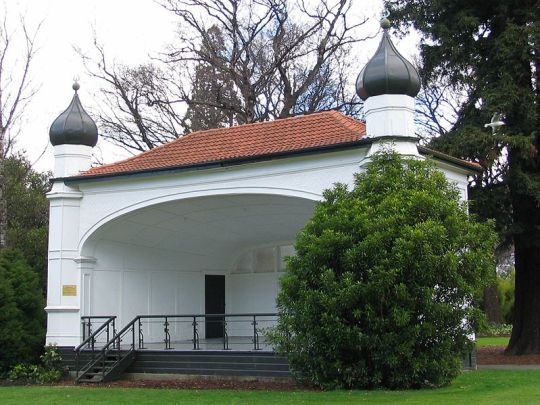
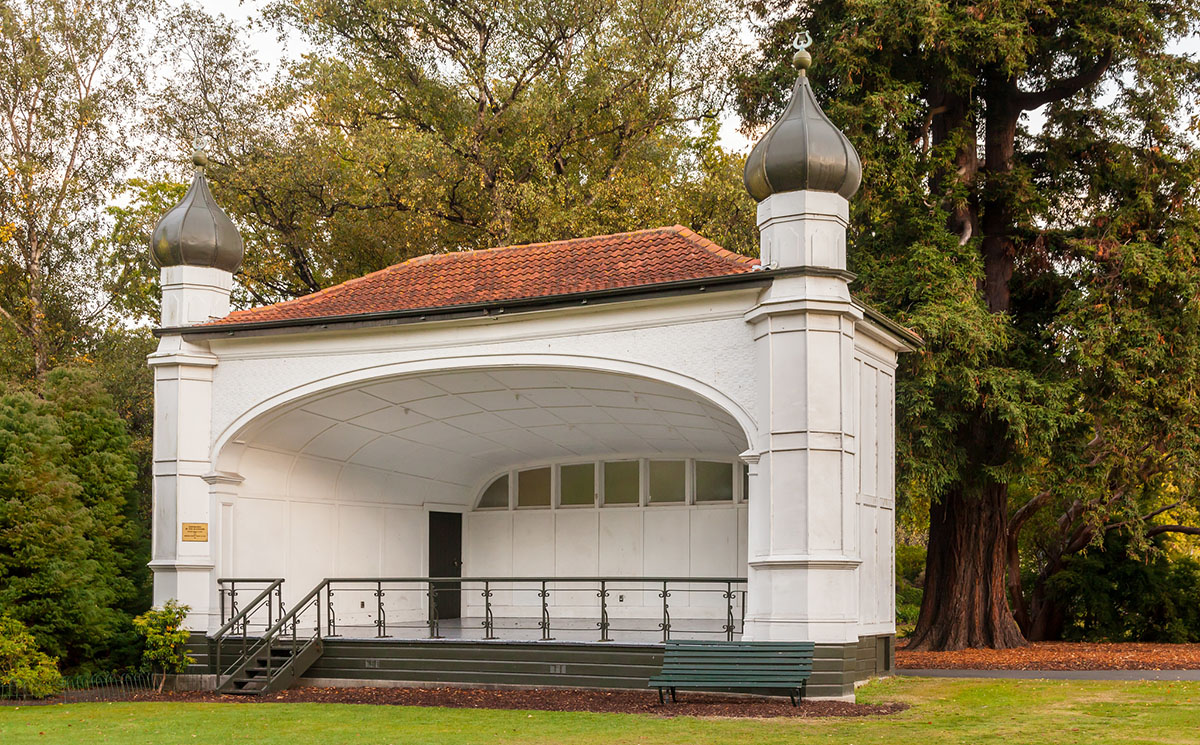
Constructed in 1914, the Dunedin Botanic Garden Bandstand-Soundshell is situated on the flat at the northern end of the picturesque Botanic Garden between the children’s playground and duck pond. The Garden is bounded by Great King Street North, Cumberland Street, Ōpoho Road, and Lovelock Avenue. The bandstand has architectural and aesthetic significance.

Both iwi history and archaeological evidence show Māori occupation in the Ōtākou / Otago region since the 12th century. Today, Kāi Tahu mana whenua is recognised over a large part of Te Wai Pounamu. Kāti Māmoe and Waitaha shared occupation are always acknowledged. The hapū Kai Te Pahi, Kāti Moki, and Kāti Taoka still maintain their presence and responsibility as kaitiaki in this region. While there were no permanent settlements around the Botanic Garden, place names indicate the area was known to Māori. Ōwheo / Water of Leith was named for Kāti Mamoe chief Wheo and his kāik was located a block south of the confluence of Ōwheo and Puke Hau Kea / Lindsay Creek. The wooded ridge that extends northwards towards Ōpoho to the East of Leith Street was known as Te Mana Kapakapa a Tiki.

The Dunedin Botanic Garden is Aotearoa / New Zealand’s oldest Botanic Garden. It was established in 1863 by the Otago Provincial Government on the land bounded by Castle, Leith, St David and Albany Streets. Devastating floods in February 1868 prompted the move to their present site at the northern end of the Town Belt in 1869. A bandstand had been situated in the gardens prior to the Council taking control in 1884. It required constant repair and in 1901 was replaced with a pavilion that had been erected ‘for ceremonies associated with the visit of the Duke and Duchess of Cornwall in June 1901’ in the Octagon. The need for a new bandstand had been under discussion since 1906 but hadn’t progressed until 1914. Designed by Mr G.W Gough, the City Council’s Building Surveyor, representatives from local bands were consulted on and approved of the plans. Gough himself described the building as,
‘The performers are all arranged facing the audience as in a theatre … I have endeavoured to treat the building in oriental design. The proscenium is flanked on each end with a domed tower … side walls and ceilings being well shaped to allow the volume of sound free egress.’

Tenders for the construction were advertised in June 1914. It was officially opened by the Mayor, Mr J.B. Shacklock, in December 1914, and described as, ‘splendidly adapted for the holding of open-air concerts.’ The ‘kiosk’ was jointly funded by Council and the Garden Fete Committee. Mr J. Rennie, the president of the Garden Fete Committee, said it, ‘… occupied an ideal position, facing the lawn and the hillside, where many thousands of people could assemble and listen to the music of the bands.’ David Tannock (1873-1952) the Superintendent of Reserves and initially against the ‘rotunda’, acknowledged it was, ‘quite an ornament to the Gardens and proved most suitable for the purpose for which it was intended.’

In the past the bandstand was used every Sunday for live music. In 1988 restoration work was undertaken to the cost of $15700 ($32,518). A plaque on the building reads, ‘Restoration of this bandstand was made possible by a grant from AMP Perpetual Trustee Company N.Z. Ltd. 1989’. The bandstand is a prominent feature in the Garden which is enjoyed year-round by the public. Sunday Bandstand was introduced in 2000 and has remained a regular fixture in the city’s calendar of events.
Bandstand-Soundshell, Dunedin. CC BY-SA 2.0 Image courtesy of www.flickr.com | russellstreet | 28/03/2013 | russellstreet
Bandstand-Soundshell, Dunedin. Image courtesy of commons.wikimedia.org | Benchill | 29/08/2009 | Benchill - Wikimedia Commons
Bandstand-Soundshell, Dunedin. CC BY-SA 2.0 Image courtesy of www.flickr.com | russellstreet | 28/03/2013 | russellstreet
Bandstand-Soundshell, Dunedin. Image courtesy of commons.wikimedia.org | Benchill | 29/08/2009 | Benchill - Wikimedia Commons

List Entry Information

Overview

Status
Listed

List Entry Status
Historic Place Category 2

Access
Able to Visit

List Number
3172

Date Entered
25th September 1986

Date of Effect
25th September 1986

City/District Council
Dunedin City

Region
Otago Region

Extent of List Entry

Extent includes the part of the land described as Pt Town Belt, Town of Dunedin, Otago Land District, and the building known as the Bandstand-Soundshell, thereon.

Legal description

Pt Town Belt, Town of Dunedin, Otago Land District

Detailed List Entry

Construction Professional

Name

Gough, George William

Type

Architect

Biography

George William Gough (1863-1936) Gough was born in Manchester and studied naval architecture under R. Napier and Sons, ship builders in Glasgow and under Messrs D & W Henderson and Co., owners of the Anchor Line. He also Completed an apprenticeship in civil architecture under George Melrose of Rothesay and studied architecture in both Canada and the United States of America. In 1886 he came to New Zealand, where he designed and constructed the S.S. Tarawera for tourist traffic on Lake Te Anau. In conjunction with Mr E. Roberts, he built the stern-wheel steamer Clyde on the Molyneux, as well as other craft. He also designed several industrial premises (including May’s Confectionary Works), many elaborately decorated villas, and a house for the superintendent of the Botanic Garden. He was a fellow of the New Zealand Institute of Architects.

Name

Messrs Knox and McDougal

Type

Builder

Biography

No biography is currently available for this construction professional

Construction Details

Start Year

1914

Type

Original Construction

Start Year

1988

Type

Refurbishment/renovation

Description

(Repairs, repainting, new steps)

Reference

Completion Date

17th May 2021

Report Written By

Sarah Gallagher

Information Sources

Dunlop, 2002

Dunlop, E. The Story of Dunedin Botanic Garden: New Zealand’s First. Friends of the Dunedin Botanic Garden Inc in association with Longacre Press, Dunedin, 2002.

Report Written By

This place was identified as significant under previous legislation with different information requirements. It remains significant under the current legislation. There is opportunity under our legislation and policies to add to this information. Further information about this place may be available from the Otago/Southland Office of Heritage New Zealand Pouhere Taonga. A fully referenced upgrade report is available on request from the Otago/Southland Area Office of Heritage New Zealand. Please note that entry on the New Zealand Heritage List/Rarangi Korero identifies only the heritage values of the property concerned, and should not be construed as advice on the state of the property, or as a comment of its soundness or safety, including in regard to earthquake risk, safety in the event of fire, or insanitary conditions.

Further Information

Current Usages

Former Usages

General Usage:: Civic Facilities

Specific Usage: Bandstand/Rotunda

Themes

Web Links

description: Dunedin Botanic Garden (NZ Garden Trust)

url: https://www.gardens.org.nz/dunedin-coastal-otago-gardens/dunedin-botanic-garden/

Overview

Status

Listed

List Entry Status

Historic Place Category 2

Access

Able to Visit

List Number

3172

Date Entered

25th September 1986

Date of Effect

25th September 1986

City/District Council

Dunedin City

Region

Otago Region

Extent of List Entry

Extent includes the part of the land described as Pt Town Belt, Town of Dunedin, Otago Land District, and the building known as the Bandstand-Soundshell, thereon.

Legal description

Pt Town Belt, Town of Dunedin, Otago Land District

Status

Listed

List Entry Status

Historic Place Category 2

Access

Able to Visit

List Number

3172

Date Entered

25th September 1986

Date of Effect

25th September 1986

City/District Council

Dunedin City

Region

Otago Region

Extent of List Entry

Extent includes the part of the land described as Pt Town Belt, Town of Dunedin, Otago Land District, and the building known as the Bandstand-Soundshell, thereon.

Legal description

Pt Town Belt, Town of Dunedin, Otago Land District

Construction Information

Construction Professional

Name

Gough, George William

Type

Architect

Biography

George William Gough (1863-1936) Gough was born in Manchester and studied naval architecture under R. Napier and Sons, ship builders in Glasgow and under Messrs D & W Henderson and Co., owners of the Anchor Line. He also Completed an apprenticeship in civil architecture under George Melrose of Rothesay and studied architecture in both Canada and the United States of America. In 1886 he came to New Zealand, where he designed and constructed the S.S. Tarawera for tourist traffic on Lake Te Anau. In conjunction with Mr E. Roberts, he built the stern-wheel steamer Clyde on the Molyneux, as well as other craft. He also designed several industrial premises (including May’s Confectionary Works), many elaborately decorated villas, and a house for the superintendent of the Botanic Garden. He was a fellow of the New Zealand Institute of Architects.

Name

Messrs Knox and McDougal

Type

Builder

Biography

No biography is currently available for this construction professional

Construction Details

Start Year

1914

Type

Original Construction

Start Year

1988

Type

Refurbishment/renovation

Description

(Repairs, repainting, new steps)

Construction Professional

Name

Gough, George William

Type

Architect

Biography

George William Gough (1863-1936) Gough was born in Manchester and studied naval architecture under R. Napier and Sons, ship builders in Glasgow and under Messrs D & W Henderson and Co., owners of the Anchor Line. He also Completed an apprenticeship in civil architecture under George Melrose of Rothesay and studied architecture in both Canada and the United States of America. In 1886 he came to New Zealand, where he designed and constructed the S.S. Tarawera for tourist traffic on Lake Te Anau. In conjunction with Mr E. Roberts, he built the stern-wheel steamer Clyde on the Molyneux, as well as other craft. He also designed several industrial premises (including May’s Confectionary Works), many elaborately decorated villas, and a house for the superintendent of the Botanic Garden. He was a fellow of the New Zealand Institute of Architects.

Name

Messrs Knox and McDougal

Type

Builder

Biography

No biography is currently available for this construction professional

Construction Details

Start Year

1914

Type

Original Construction

Start Year

1988

Type

Refurbishment/renovation

Description

(Repairs, repainting, new steps)

Reference

Historical and Associated Iwi / Hapū / Whānau

Completion Date

17th May 2021

Report Written By

Sarah Gallagher

Information Sources

Dunlop, 2002

Dunlop, E. The Story of Dunedin Botanic Garden: New Zealand’s First. Friends of the Dunedin Botanic Garden Inc in association with Longacre Press, Dunedin, 2002.

Other Information

This place was identified as significant under previous legislation with different information requirements. It remains significant under the current legislation. There is opportunity under our legislation and policies to add to this information. Further information about this place may be available from the Otago/Southland Office of Heritage New Zealand Pouhere Taonga. A fully referenced upgrade report is available on request from the Otago/Southland Area Office of Heritage New Zealand. Please note that entry on the New Zealand Heritage List/Rarangi Korero identifies only the heritage values of the property concerned, and should not be construed as advice on the state of the property, or as a comment of its soundness or safety, including in regard to earthquake risk, safety in the event of fire, or insanitary conditions.

Historical and Associated Iwi / Hapū / Whānau

Completion Date

17th May 2021

Report Written By

Sarah Gallagher

Information Sources

Dunlop, 2002

Dunlop, E. The Story of Dunedin Botanic Garden: New Zealand’s First. Friends of the Dunedin Botanic Garden Inc in association with Longacre Press, Dunedin, 2002.

Other Information

This place was identified as significant under previous legislation with different information requirements. It remains significant under the current legislation. There is opportunity under our legislation and policies to add to this information. Further information about this place may be available from the Otago/Southland Office of Heritage New Zealand Pouhere Taonga. A fully referenced upgrade report is available on request from the Otago/Southland Area Office of Heritage New Zealand. Please note that entry on the New Zealand Heritage List/Rarangi Korero identifies only the heritage values of the property concerned, and should not be construed as advice on the state of the property, or as a comment of its soundness or safety, including in regard to earthquake risk, safety in the event of fire, or insanitary conditions.

Further Information

Former Usages

General Usage: Civic Facilities

Specific Usage: Bandstand/Rotunda

Web Links

description: Dunedin Botanic Garden (NZ Garden Trust)

url: https://www.gardens.org.nz/dunedin-coastal-otago-gardens/dunedin-botanic-garden/

Former Usages

General Usage: Civic Facilities

Specific Usage: Bandstand/Rotunda

Web Links

description: Dunedin Botanic Garden (NZ Garden Trust)

url: https://www.gardens.org.nz/dunedin-coastal-otago-gardens/dunedin-botanic-garden/

Location

Loading
Related listings
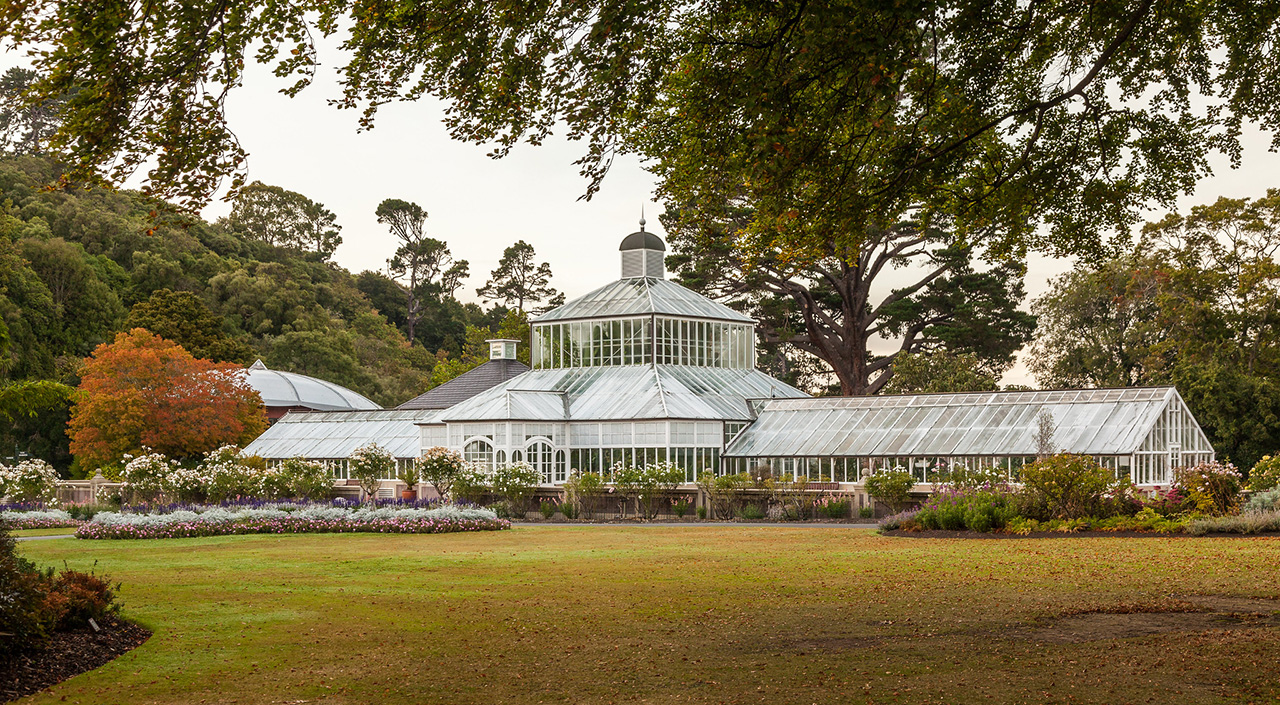
Winter Garden, Dunedin. CC BY-SA 2.0 Image courtesy of www.flickr.com
Winter Garden
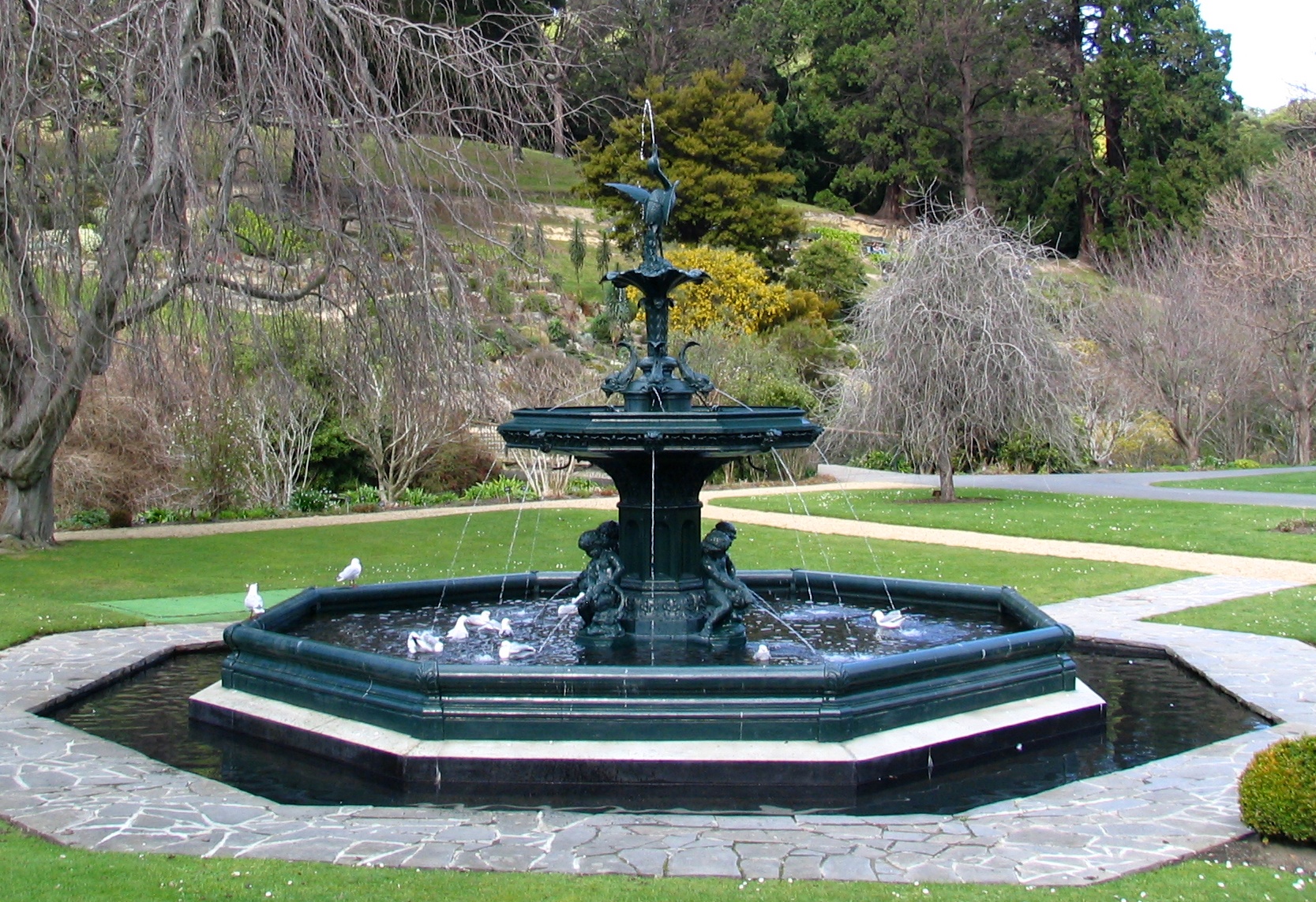
Wolf Harris Fountain, Dunedin. CC BY-SA 3.0 Image courtesy of commons.wikimedia.org
Wolf Harris Fountain
Wolf Harris Fountain, Dunedin. CC BY-SA 3.0 Image courtesy of commons.wikimedia.org
Wolf Harris Fountain
Winter Garden, Dunedin. CC BY-SA 2.0 Image courtesy of www.flickr.com
Winter Garden
Stay up to date with Heritage this month